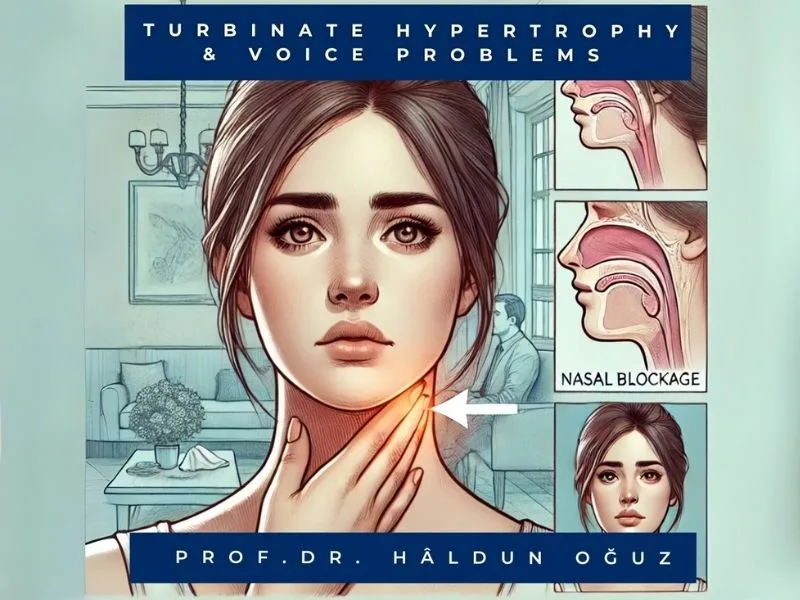
What do the turbinates do?
The turbinates (also called nasal conchae) are structures on the inside of the nose. There are three pairs of turbinates, stacked one above the other on each side wall of the nose. The largest of these, the inferior turbinates, warm, humidify and filter the air you breathe. Throughout the day, the turbinates take turns swelling and shrinking slightly; this is the natural cycle of the nose.
Allergies, long-standing inflammation of the nose, hormonal changes or prolonged use of nasal sprays can cause the turbinates to become permanently enlarged. This can lead to a blocked nose, mouth breathing, snoring and poorer sleep quality.
The good news: turbinate reduction is a short procedure that helps make breathing easier in suitable patients. Today’s methods aim to reduce only the excess tissue while preserving the function of the turbinate.
Who is it considered for?
Turbinate reduction is planned by assessing the following together:
- Nasal obstruction that has lasted a long time
- Clearly enlarged inferior turbinates on examination
- Symptoms that continue despite medical treatments such as nasal sprays and allergy treatment
- Obstruction that affects sleep, exercise or quality of daily life
The turbinates are not always the only cause of a blocked nose. A bend in the wall between the nostrils (septal deviation), nasal polyps, adenoids or weakness of the nasal sidewalls can also cause obstruction. This is why treatment is planned by assessing all possible causes together.
Before surgery: the first step is medical treatment
A large share of turbinate enlargement is caused by allergic or non-allergic inflammation of the nose. This is why the first step is often medical treatment:
- The nasal sprays your doctor recommends (such as steroid nasal sprays) are used regularly. These sprays can be used for a long time.
- If you have allergies, avoiding triggers and allergy treatment are planned.
- Saline sprays moisturize the inside of the nose, reduce the size of the turbinates somewhat and bring relief.
- Using decongestant nasal sprays for more than a few days can make the turbinates swell even more; stopping these sprays is also part of treatment.
- As these short notes show, some sprays are quite safe for long-term use, while others are suitable for only a few days of use.
How is turbinate reduction performed?
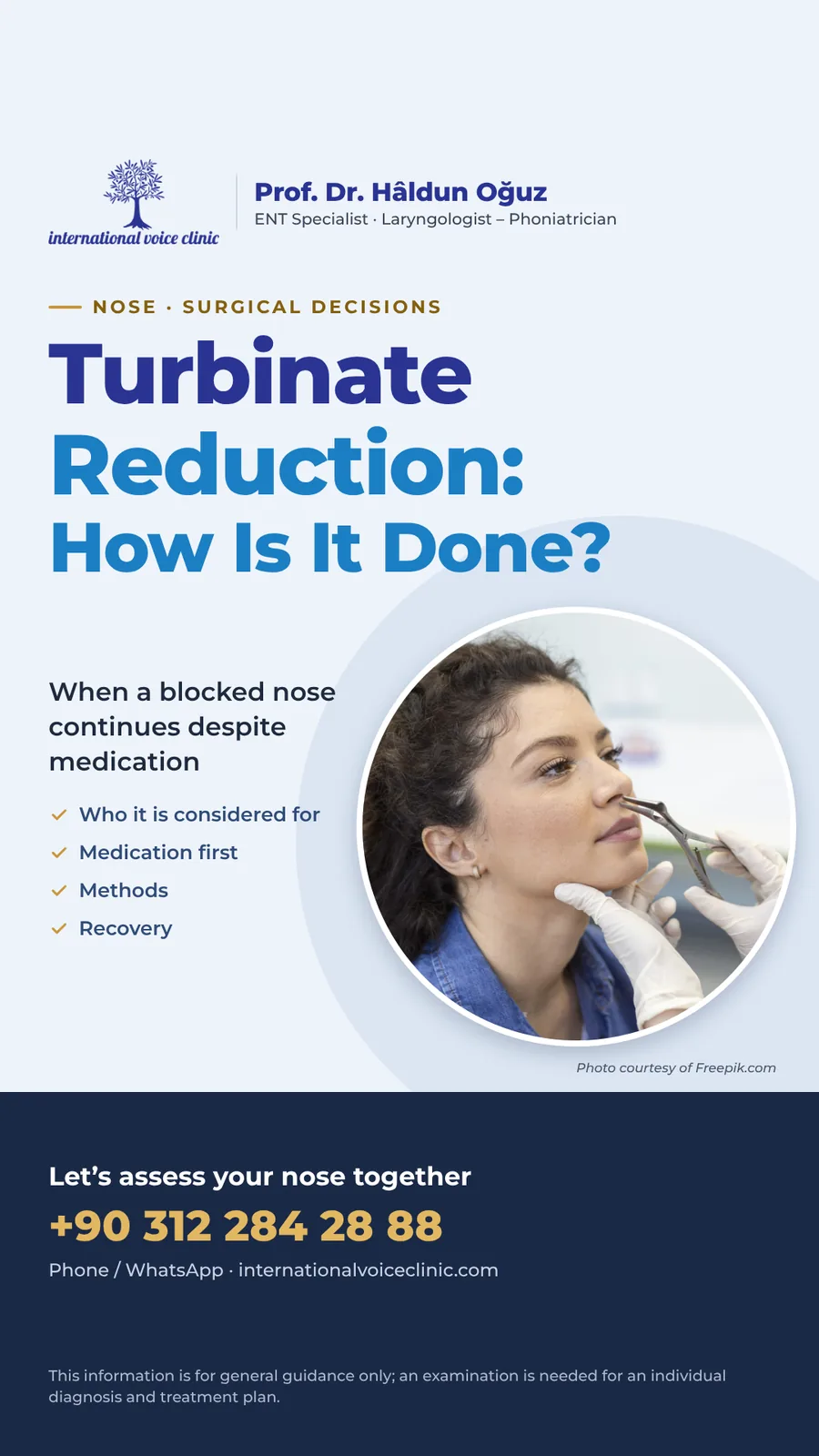
The procedure is done through the nostrils; there are no incisions on the face or the outside of the nose. The right method is chosen based on the size of the turbinate, the type of tissue and any other procedures done at the same time.
- Radiofrequency / coblation reduction: A thin probe is placed inside the turbinate, and the inner tissue of the turbinate is reduced with controlled heat energy. The surface lining (mucosa) is preserved. In suitable patients, it can be done in the office under local anesthesia.
- Submucosal reduction with a microdebrider: A small opening is made on the surface of the turbinate, and the excess inner tissue is removed with a thin rotating instrument. The surface lining is again preserved.
- Changing the angle of the turbinate (outfracture): The bony framework of the turbinate is gently pushed outward to open more airway inside the nose. It is often combined with other methods.
- Bone reduction: In turbinates with a markedly enlarged bony structure, part of the bone can be removed while the mucosa is preserved.
When needed, turbinate reduction can be done in the same session as surgery to straighten the nasal septum (septoplasty) or sinus surgery. The procedure is usually done with an endoscope, which gives a magnified view of the inside of the nose.
On the day of surgery and afterward
- Anesthesia: Turbinate reduction on its own can often be done under local anesthesia. General anesthesia is preferred when it is combined with other nasal surgery or when a more comfortable experience is planned.
- Duration: The procedure is usually short, and most patients go home the same day.
- Packing: Packing is usually not needed after turbinate reduction on its own. When needed, soft supports or silicone splints that do not block breathing can be used.
- The first days: You may have nasal congestion, mild discharge and crusting. These are a natural part of healing and ease within days.
- Seawater nasal sprays: The recommended nasal sprays help clear crusts and support healing.
- The result: The improvement in breathing becomes noticeable within a few weeks as the tissues heal.
What does research show?
- In a systematic review and meta-analysis of 26 studies on inferior turbinate reduction, nasal obstruction scores and nasal airflow measurements improved significantly after the procedure.
In short, turbinate reduction done in the right patient with the right method is an effective option for relieving nasal obstruction.
What are the risks?
Turbinate reduction is a low-risk procedure. Still, as with any surgical procedure, some issues can occur:
- Nosebleeds (usually mild and stop on their own)
- Crusting and dryness that last longer than expected
- The turbinates growing larger again over time
Choosing methods that preserve the mucosa helps the turbinate keep doing its job and helps keep these risks to a minimum.
Frequently asked questions
Is turbinate reduction painful?
Thanks to anesthesia, you do not feel pain during the procedure. You may have mild discomfort afterward; it is usually managed with simple pain relievers.
When can I go back to work?
After turbinate reduction on its own, most people return to work within a few days. When it is combined with other nasal surgery, this can take a little longer.
Does turbinate reduction change the shape of my nose?
No. The procedure is done entirely inside the nose and does not affect how your nose looks.
Is turbinate reduction permanent?
How long the results last depends on the underlying cause and the method used. If underlying causes such as allergies continue, the turbinates can grow larger again over time. We will cover this topic in detail on our page “Is turbinate reduction permanent?”
I can’t stop using my decongestant spray; can turbinate reduction help?
When the turbinates are swollen from long-term use of decongestant sprays, the first plan is to stop the spray. When needed, turbinate reduction can make breathing easier during this process and help make stopping the spray easier.
Let’s assess your nose together
If a blocked nose keeps you from breathing comfortably, makes you breathe through your mouth or affects your sleep, contact us for a comprehensive nose and sinus assessment. Wishing you healthy, easy breathing.
Phone / WhatsApp: +90 312 284 28 88
The information on this page is for general guidance only; an examination is needed for an individual diagnosis and treatment plan.