

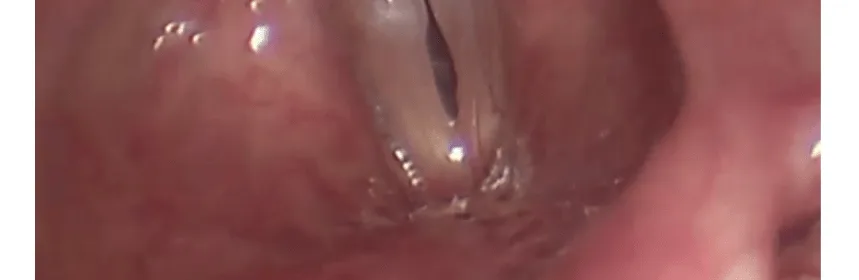
A vocal cord nodule (also called a vocal fold nodule) is a benign growth — that is, one not associated with vocal cord cancer — that forms on the free surface where the vocal cords come into contact.
How does a vocal cord nodule occur?
Nodules develop through misuse or overuse of the voice. Because they are caused by long-term use of the voice at the wrong volume, the wrong pitch or under inappropriate strain, they are roughly similar to the calluses that form on our hands or feet.
Who gets vocal cord nodules most often?
Teachers, voice artists, news announcers, call centre workers and religious officials use their voices professionally, and vocal cord nodules are much more common in these groups than in other segments of society. Nodules are one of the leading causes of hoarseness.
Are vocal cord nodules seen in children?
Vocal cord nodules can also be seen in childhood. They are the most common cause of long-term hoarseness in children, and in children they occur more frequently in boys than in girls. Just as in adults, the most common cause is excessive or incorrect use of the voice. Children who frequently experience upper respiratory infections, clear their throat often, have allergies and throat reflux, study in crowded classrooms, or have several siblings also tend to develop vocal cord nodules more frequently.
Are vocal cord nodules more common in women?
Vocal cord nodules can be seen at any age and in either sex, but they are seen much more frequently in adult women than in adult men. Before puberty the opposite is true: they are seen more often in boys than in girls.
What are the symptoms of vocal cord nodules?
The symptoms of vocal cord nodules are generally hoarseness, change in voice, breathy voice and roughness in voice. A professional voice user may describe the voice as coming out at a lower pitch, or as more breathy, raspy and grating than normal. Professional voice users may also notice a narrowing of their vocal range.
In addition to changes in the voice, people may complain of pain in the neck muscles caused by increased voice use, as well as difficulty speaking and even difficulty swallowing.
How do the vocal cords work?
The vocal cords are made up of two structures that are joined at one end and spread apart at the other, resembling the letter V. They contain muscle on the inside and the soft tissue known as mucosa on the outside.
During speech the vocal cords of an average man strike each other about 120 times per second, and a woman's vocal cords about 200 times. The vocal cords are therefore the soft tissue in the body most susceptible to trauma.
When should you see a doctor about vocal cord nodules?
People who do not use their voice professionally should see a voice doctor if hoarseness lasts more than two weeks. A professional voice user generally does not have the luxury of waiting that long. Your voice doctor will want to listen to your complaints and build an adequate picture of your voice health and general medical history before going into your professional vocal expectations in detail.
It is worth noting that someone who needs diagnosis and treatment for a professional voice is not necessarily a vocal artist. Many occupations require people to express themselves and carry out their work by voice throughout the day: teachers, lawyers, call centre employees, bank, municipal and postal service workers who need their voices for customer service, shopkeepers, tradespeople, religious officials and many others.
How are the vocal cords examined? How is a vocal cord nodule diagnosed?
Vocal cord nodules are diagnosed, and their cause established, through a detailed examination of the voice and the vocal cords. The ideal combination for this is videolaryngostroboscopy together with objective voice analysis.
Which factors play a role in the formation of vocal cord nodules?
The primary factor in the formation of vocal cord nodules is misuse or overuse of the voice. Other causes can contribute as well, including laryngopharyngeal reflux, allergies, psychological factors and personality traits. The last two also influence nodule formation because they can lead to overuse or misuse of the voice. People with vocal cord nodules are often observed to be more extroverted, to take part in social activities more often, and to be assertive and motivated.
How are vocal cord nodules treated? What are the options?
There are two basic methods in the treatment of nodules: voice therapy and vocal cord surgery.
The ideal way to treat a nodule caused by misuse or overuse of the voice is to stop using the voice in that way. Developing the habit of using the voice correctly, and using proper vocal technique to avoid excessive pressure on the vocal cords, will not only make the nodules smaller or even make them disappear, but will also remove the risk of recurrence. The primary method of teaching correct voice use is voice therapy.
Voice therapy is usually sufficient as a stand-alone treatment for most nodules. It is a form of treatment that should be tailored to the clinical situation and needs of each individual: the framework of the plan is drawn according to the patient's age, level of voice use and whether they have any professional aspirations for their voice. Some elements belong in every therapy programme — informing the patient about the behaviours that cause or worsen nodule formation, minimising those behaviours, and putting in place new behavioural and environmental changes appropriate to the person's voice use and professional demands.
Some nodules are nevertheless resistant to treatment, including to voice therapy. Vocal cord nodules that do not heal despite strict adherence to proper vocal hygiene and correct vocal technique are treated with a special operation called phonomicrosurgery, which is performed under general anaesthesia with the aid of a microscope.