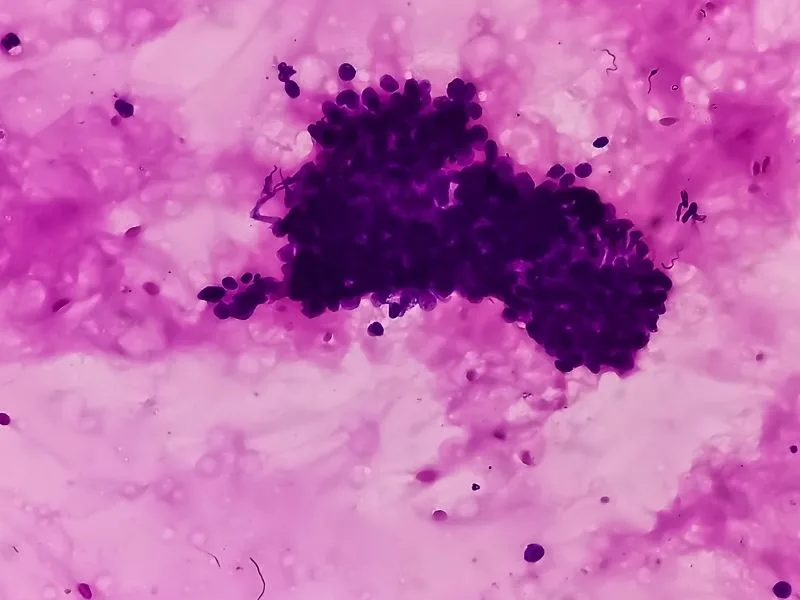

What is a cyst?
A vocal cord cyst (also called a vocal fold cyst), like other cysts, is formed by the accumulation of a substance in a cavity surrounded by a membrane. In a vocal cord cyst, this substance may be a mucus secretion from the glands, or keratin.
What are the causes of vocal cord cysts?
The vocal cords consist of several layered structures. The top surface, where the vocal cords collide, contains epithelium. Below the epithelium is the lamina propria, which contains connective tissue that becomes firmer deeper below the surface, and at the bottom are the vocal cord muscles. The vocal cord cyst is located in the superficial lamina propria, which is a very important layer for the normal function of the vocal cords. Vocal cord cysts usually occur as a result of blockage of the glands on the surface of the vocal cords. People who do not pay attention to vocal hygiene are more likely to develop cysts on the vocal cords. The cyst is usually seen in the middle third of the vocal cords, which is most exposed to phonotrauma.
Are vocal cord cysts malignant?
Cysts seen in the vocal cords are benign disorders. If left untreated, they do not turn into malignant disease. In other words, they are not a pre-cancerous condition and do not turn into cancer. Hoarseness, voice tension, the feeling of something stuck in the throat after talking for a while, and repeated throat clearing can be caused by improper closure of the vocal cords. They are usually painless, but when the person speaks for a long time, pain in the neck muscles may occur due to improper use of the muscles surrounding the vocal cords.

How to recognise a vocal cord cyst?
The shape of a cyst is usually round or oval. Depending on its content, it may be transparent, white or yellowish. Videolaryngostroboscopic imaging or distal-chip high-resolution flexible digital imaging is useful for differential diagnosis from other vocal cord diseases such as nodules and polyps.
How is a vocal cord cyst treated?
Drugs have no benefit in the treatment of vocal cord cysts. Voice rest (restriction of voice use) and medications can reduce inflammation around the cyst and relax the neck muscles, but complete healing of the cyst is not an expected result of voice rest. The actual treatment of vocal cord cysts is performed by vocal cord surgery (phonomicrosurgery) under a microscope. The cyst is treated by completely removing it. After the operation, voice therapy is useful in maintaining vocal hygiene and preventing recurrence of the cyst.