
Hoarseness may be the first symptom of various diseases.
The position of the vocal cords reminds us of their value. They are located in a strong tissue in our neck known as the thyroid cartilage, which shows how much they need protecting from external factors. The vocal cords not only produce sound, the most important tool we use for communication, but also protect the lower respiratory tract (the trachea and lungs).
The vocal cords are one of the most traumatised parts of our body. They touch approximately 100–120 times in men and 200–240 times in women during speech.
Hoarseness, especially due to infections, can be the first symptom of various conditions: benign vocal cord disorders (vocal cord nodule, vocal cord polyp, vocal cord cyst, sulcus vocalis, bleeding, laryngopharyngeal reflux, and others), disorders that carry a risk of vocal cord cancer (white and red vocal cord lesions: leukoplakia, erythroplasia, keratosis, and others), and vocal cord cancer — laryngeal cancer. For this reason, it is advisable to consult an otorhinolaryngologist, especially when hoarseness lasts longer than 10–14 days.
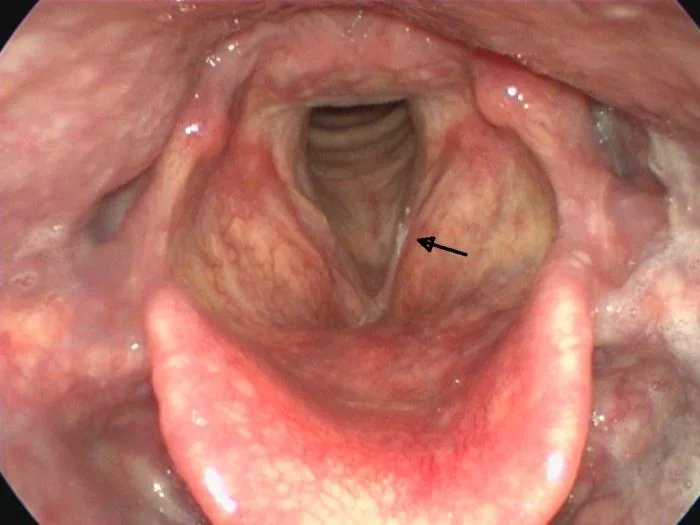
The photograph below shows a pathological vocal cord lesion — a vocal cord white lesion (leukoplakia) — which indicates the onset of vocal cord cancer (carcinoma in situ).