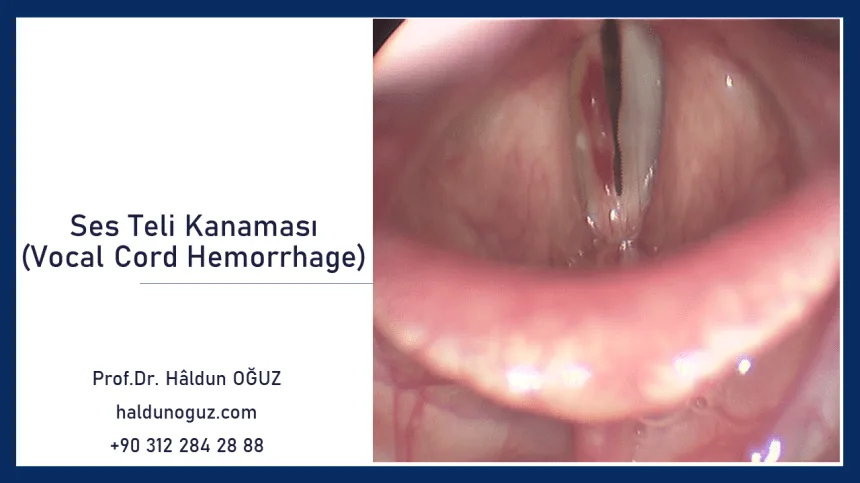

Vocal cord haemorrhage (also called vocal fold haemorrhage) is a condition characterised by the rupture of one of the small blood vessels in the superficial lamina propria layer just below the epithelium of the layered structure of the vocal cords, causing this area to fill with blood.
How does bleeding occur in the vocal cords? What are the factors causing vocal cord bleeding?
The cause of bleeding is excessive or improper use of the voice. It usually occurs after behaviours such as shouting, coughing, screaming, singing or retching. In upper respiratory tract infections (such as pharyngitis or laryngitis), the epithelium is more prone to bleeding due to its increased sensitivity.
What are the symptoms of bleeding in the vocal cords? What are the patient's complaints?
People with bleeding in the vocal cords usually consult a doctor with symptoms such as hoarseness, irregularity in the voice and roughness in the voice. It is usually painless if there is no accompanying upper respiratory tract infection.
Who is most likely to experience vocal cord haemorrhage? Who are the individuals at risk of vocal cord bleeding?
Vocal cord haemorrhage most often occurs in people who use their voices intensively and in a harmful way. These include teachers, clergy, politicians, sports trainers and street vendors who call out to sell. People who use blood-thinning medication can also be considered at risk of vocal cord bleeding.
How to recognise bleeding in the vocal cords? How is it diagnosed?
The diagnosis of vocal cord haemorrhage can be made by videolaryngostroboscopic or flexible endoscopic examination of the vocal cords.
How does it heal when there is bleeding in the vocal cords? How is vocal cord bleeding treated?
Absolute and/or limited vocal rest may be required to heal the bleeding. In some cases, surgical treatment and voice therapy may be required for pathologies that occur after the bleeding.