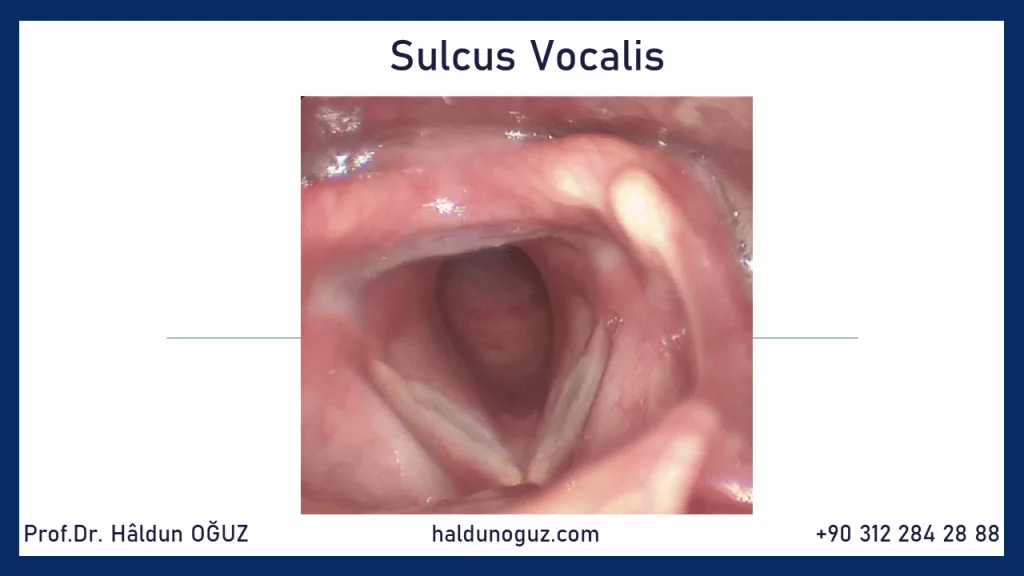

Vocal cord scarring (also called vocal fold scarring) is a clinical condition caused by damage to the epithelial and lamina propria layers of the vocal cords. For the vocal cords to function effectively, they must have a solid, multi-layered structure, with the mucosal layers resting on muscle tissue and vibrating harmoniously in both vocal cords.
How does vocal cord scarring occur?
Vocal cord scarring is caused by damage to the vibrating mucosal layers, especially the superficial tissue known as the lamina propria. Damage to this flexible, soft tissue causes the superficial epithelial layer to adhere to the underlying hard muscle layer, and the vocal cord loses its flexibility. The size of the inflexible hard scar tissue can vary depending on the cause.
The most important cause of vocal cord scarring is surgery. The most common surgical procedure causing scarring is microlaryngoscopy for benign and malignant diseases of the vocal cords. Intubation-related damage or blunt or sharp trauma to the larynx during other surgeries can also cause scarring. During treatment of benign voice disorders, the surgeon's careful technique can largely prevent scarring. However, scarring after treatment of vocal cord cancers is inevitable and an expected outcome.
What can be done to prevent vocal cord injury?
After surgery for benign voice disorders, not using the voice for an appropriate period of time, treating laryngopharyngeal reflux, and quitting smoking and alcohol use are appropriate measures to minimise the risk of scarring.
What are the symptoms of scarring?
The most common complaint of individuals with vocal cord scarring is hoarseness. Hoarseness may become more pronounced as the duration of voice use increases. Generally, the larger the scar, the more severe the voice problem becomes.
How is it diagnosed?
The diagnosis of vocal cord scarring is made during endoscopic examination of the vocal cords in office conditions, under the special light technique called videolaryngostroboscopy, which reveals vibrational movements on the inner surface of the vocal cords that cannot otherwise be seen.
How is vocal cord scarring treated?
There is no single method that is useful in treating vocal cord scarring in every patient. It is therefore very important to prevent the formation of vocal cord scars in the first place. The treatment method for an existing scar is microscopic surgery of the vocal cords under general anaesthesia, a technique known as microlaryngoscopy. When surgically treating a scar, the use of medical treatment before and after the operation, together with voice therapy, gives a better outcome.